
Rightful Ownership
Play Rightful Ownership
Rightful Ownership Screenshots











Rightful Ownership review
Discover the choice-driven story, resource management, and unique endings of Rightful Ownership
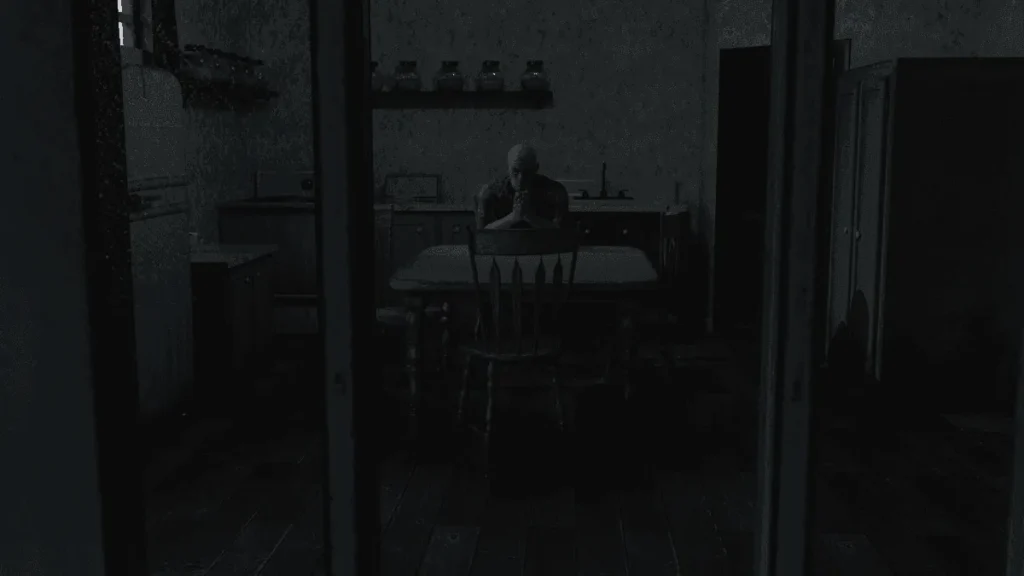
Ever stumbled upon a game that grabs you by the collar and doesn’t let go? That’s Rightful Ownership for me—a bold, unapologetic adult title that blends a choice-driven narrative with strategic resource management. At its heart are two pillars: a memory-rich story and a layer called ‘ownership progression’ where you manage Influence and Opportunity cards. Whether you’re drawn to its psychological tension or its puzzle-like rooms, Rightful Ownership offers a tense, atmospheric experience built on one brilliant premise: proving you own the space you’re in. This guide dives into everything you need to know to start your journey.
What Makes Rightful Ownership a Unique Adult Adventure?
How the Choice-Driven Narrative Shapes Your Story
Let me tell you about the first time I played Rightful Ownership and made a decision that genuinely surprised me. I was maybe an hour in, juggling conversations with two characters, and I chose to reveal a piece of information that felt harmless at the moment. The next scene didn’t just shift—it shattered the path I thought I was on. A character I had been building trust with suddenly became guarded. A door closed. And a strange, new opportunity flickered into existence on the other side of the map. 🗺️
That is the magic of a true choice-driven adult story. Rightful Ownership doesn’t just give you a binary “good” or “bad” option. Every conversation, every missed glance, and every calculated risk feeds into a sprawling web of narrative branches. The game remembers. It remembers that you hesitated when asked a direct question. It remembers that you spent a resource to help someone, rather than hoard it. This memory creates a story that feels incredibly personal, almost like it’s reading your mind and reacting.
This is not a linear visual novel where you just click through to the next lewd scene. The Rightful Ownership narrative is a living ecosystem. Your choices don’t just change the ending; they change the texture of every scene along the way. You might think you are building a stable path toward one character, only to discover that a small remark you made three hours ago has planted a “spark of curiosity” in another character’s mind. Suddenly, your entire strategy shifts. It feels less like playing a game and more like navigating a complex, emotional labyrinth where every turn holds weight.
“We wanted players to feel the gravity of every interaction. In Rightful Ownership, a bold decision isn’t just about getting a different cutscene—it’s about reshaping the very fabric of the story you are living in.” — Lead Developer, Rightful Holdings
Understanding the Ownership Progression Resource Layer
So, how do you navigate this labyrinth without losing your mind? That’s where the game’s ownership progression game layer comes into play. This is the strategic spine that supports the narrative flesh. Forget simple stat boosts. Rightful Ownership uses a resource system built around two core elements: Influence cards and Opportunity cards. 🃏
Think of Influence cards as your social capital. You earn them by making choices that align with your character’s goals or by succeeding in tricky dialogue challenges. You spend them to grease the wheels of a conversation, force a reaction, or nudge a character’s mindset in a specific direction. My Influence cards strategy became simple but brutal: I always saved at least one high-value Influence card for a crisis moment. Never go to a big story junction with an empty hand.
On the other side are Opportunity cards. These are the game’s wild cards. They pop up at unexpected moments, triggered by past decisions or specific story triggers. The Opportunity card mechanics are deceptively simple: you can choose to play a card to unlock a secret scene, a hidden dialogue option, or a shortcut that bypasses a difficult challenge. I once played an Opportunity card at a critical junction—right when a character was about to make a decision that would lock me out of her path entirely. That single card flipped the entire scene. It opened a narrative branch I hadn’t even seen on my first playthrough. 🚪
The real beauty of this system is that you are constantly balancing two different types of progress: your emotional progress with the characters (driven by the story) and your strategic progress (driven by your card hand). Ignore your cards, and you’ll hit a wall where you can’t influence a key decision. Overfocus on hoarding cards, and you’ll miss the rich, emotional moments that define this adult adventure game.
Why the Relationship Log is Your Most Important Tool
I’m going to be honest with you: I ignored the Relationship Log for the first two hours of my playthrough. I thought it was just a boring data screen. I was totally wrong. It is, without question, the most powerful tool in your arsenal. Ignoring it is like taking a tank to kill a fly—you’ll get the job done, but you’ll miss all the subtlety. 🧐
This log is not a simple “like/dislike” meter. Instead, it provides cryptic, poetic hints about each character’s internal state. You will see phrases like “seed of doubt” or “spark of curiosity” . These are the Relationship Log hints that tell you exactly where you stand, but in a way that requires you to read between the lines. A “seed of doubt” might mean you need to dedicate time to build trust, while a “spark of curiosity” means you are on the right track to unlocking a deeper, more intimate path.
Let me break down a few key states I’ve encountered, and what they mean for your strategy:
| Mind State | What It Means | Your Best Move |
|---|---|---|
| Spark of Curiosity | You are on the right path. They are intrigued. | Push forward with bold choices. Spend an Opportunity card here. |
| Seed of Doubt | Something you did made them question your motives. | Take a step back. Use an Influence card to smooth things over. |
| Wall of Silence | You have pushed too hard. They are closing off. | Stop engaging directly. Focus on other characters for a while. |
| Ember of Trust | You have built a solid foundation. Vulnerability is possible. | This is the gateway to deeper story branches. Protect this trust. |
Each one of these states is a direct result of your actions. You can’t brute-force your way through the Rightful Ownership narrative. You have to be strategic. When you see “Seed of Doubt” in your Relationship Log, it is a clear signal that your current Influence cards strategy isn’t working for this specific character. You need to adapt. You need to change your approach, maybe by spending a card to create a moment of vulnerability, or by pulling back and letting the story breathe.
Learning to read these hints is the difference between stumbling toward an ending and deliberately crafting your own, unique experience. It transforms the game from a simple interactive story into a deep, fulfilling adventure game where your choices have weight, memory, and consequence. 🎯
So, the next time you sit down to play, don’t just rush toward the next scene. Open your Relationship Log. Study those cryptic clues. And plan your next move with the Opportunity card mechanics in mind. I promise you, the story you unlock will be far more rewarding than anything you could have stumbled upon blindly.
Rightful Ownership is a standout adult adventure that masterfully combines a choice-driven narrative with strategic resource management. By embracing bold decisions, reading the Relationship Log relentlessly, and committing to a role, players unlock unique endings and rich narrative branches. Don’t hoard resources early—spend Influence or Opportunity cards at critical moments to discover new story paths. Whether you’re drawn to its psychological tension or puzzle-like rooms, this game offers a tense, atmospheric experience built on proving you belong. Start your first playthrough blind, let your instincts guide you, and live with the consequences for the most rewarding journey.